Tomb Busters
- 4.4
- Rating
- 100.00K
- Installs
- Free
- Price

 Analysis by App-foxy
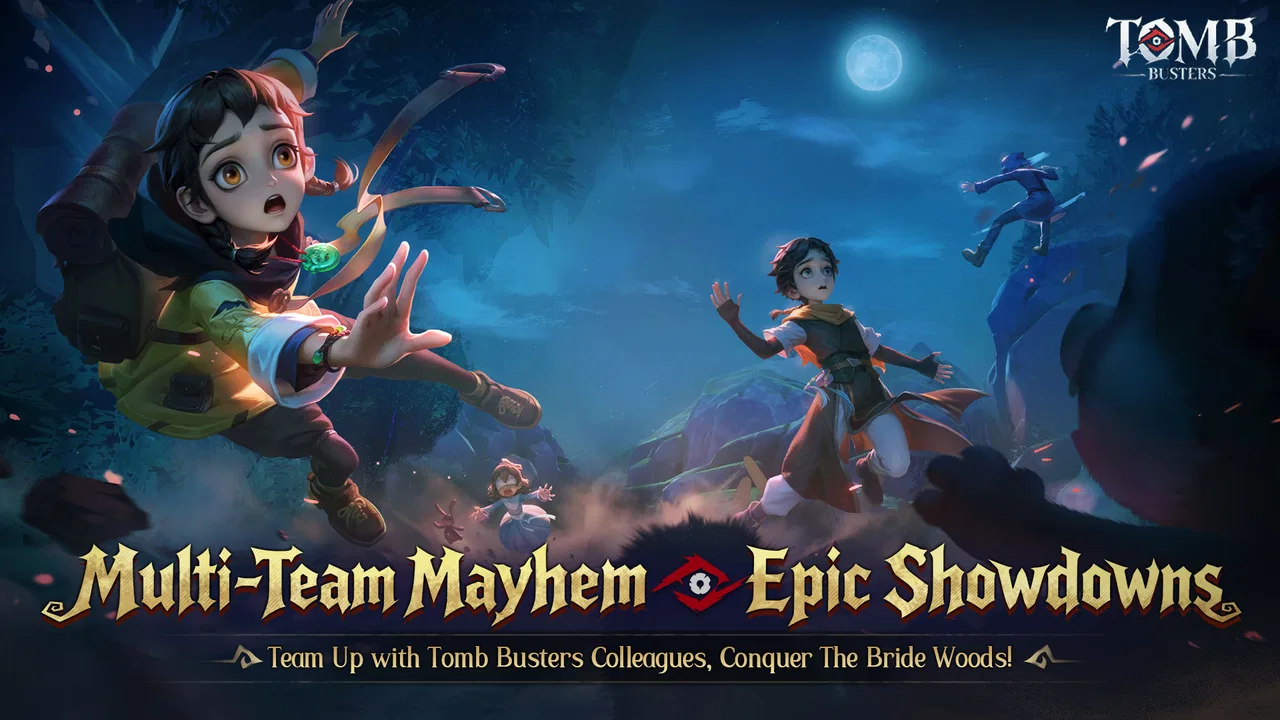
Tomb Busters is an adventure game built around a simple question: can a group stay calm long enough to escape a dangerous tomb? I found its appeal less in solitary exploration and more in the shared tension of a co-op horror outing. The tone aims for laughs as well as scares, so it suits players who enjoy being startled, making mistakes together, and turning a failed run into a story worth retelling.
It is free to download, with optional purchases ranging from $0.99 to $99.99 per item. The Teen content rating is worth taking seriously if children may use the device, because the horror framing and peril are not aimed at very young players. Giant Game is the developer, and the game has reached over 100 thousand installs. Its average sits at 3.6 from around 860 ratings, which suggests a mixed but meaningful reception rather than universal approval.
How Tomb Busters feels to play and who can comfortably join
I find Tomb Busters easiest to enjoy when the group treats cooperation as its own part of the challenge, not just a way to get through the tomb faster. Before starting, I’d agree on a simple plan for keeping everyone together and make it clear that pausing or sitting out is fine. That small bit of coordination can make the experience more comfortable for newcomers and gives us a useful way to judge whether the game’s shared tension suits the whole group.
You May Also Like

 AccuWeather: Weather Radar
AccuWeather Review: A Quick, Clear Forecast for Everyday Decisions
For everyday plans, the best forecast is the one you can understand quickly. AccuWeather makes rain timing, radar, and local conditions easy to act on, with a few trade-offs.

 Hill Climb Racing
Why Hill Climb Racing Still Turns Crashes Into One More Run
A tiny car, a bumpy hill and one more upgrade: Hill Climb Racing keeps resurfacing because its simple chaos makes every near-miss feel personal.

 AliExpress - Shopping App
AliExpress Makes Global Shopping Feel Personal, but Shoppers Bear the Risk
AliExpress turns a global marketplace into a pocket-sized discovery engine. Its reach is useful, its shopping loop compelling, and its trade-offs easy to miss.

 Lords Mobile: Kingdom Wars
Lords Mobile Is a Kingdom-Building Routine, Not a Quick Match
A case-by-case verdict on the building, battles, device demands, and social commitments that make Lords Mobile rewarding for some players and exhausting for others.

 PDF Scanner app - TapScanner
TapScanner Makes Paperwork Easier to Capture, Check, and Share
TapScanner makes scanning with a phone feel less like a rescue operation and more like a dependable step in getting work done. Its capture tools are useful, though not flawless.

 Block Blast!
 Shows How Much a Puzzle Game Can Leave Out
A quiet grid game shows why puzzle players increasingly value instant clarity, repeatable skill and low-pressure play—and where the genre still needs to catch up.
More From Our News Desk
View All News


Readability matters more than decoration in a dark adventure
Horror games often use darkness, sudden movement, and visual clutter to create pressure. That can be effective, but it also makes basic navigation harder. In Tomb Busters, I would approach every room with the practical question of whether I can quickly identify the route, a useful object, a threat, and the position of another player. When those elements compete for attention, the comedy can disappear and the experience becomes tiring instead of exciting.
The best way to play is to keep the screen free from distractions outside the game. A larger phone or tablet can make environmental details easier to separate, while a small display may demand more concentration during frantic moments. I also recommend checking the game in a quiet, well-lit place before starting a longer session. That does not change the game itself, but it makes it easier to notice visual cues and follow the action without straining.
Navigation is especially important for players who do not enjoy memorizing spaces. A co-op adventure can become confusing when everyone moves in different directions, so I found that a clear verbal plan helps: one person watches the route, another keeps track of the group, and nobody rushes ahead simply because a passage looks interesting. This is a useful habit even for experienced players, because panic encourages everyone to make the same mistake at once.
Text and interface elements deserve the same attention as the tomb itself. If you have difficulty reading small writing, play on the largest compatible screen available and hold the device at a comfortable distance. The current version is 1.29.26.001, and the minimum operating system is Android 9. That makes checking device compatibility part of preparation, particularly if you are using an older phone or handing the game to someone who relies on a shared family device.
Controls, timing, and sensory load
Co-op horror places unusual demands on motor control. You may need to move, turn, react to danger, and communicate almost simultaneously. Players with limited dexterity, joint pain, tremors, or fatigue may find rapid sequences more difficult than the game’s humorous presentation suggests. I would not judge the experience only by whether the controls are easy during a calm moment; the real test is whether they remain manageable when the screen becomes busy and the group starts shouting directions.
A practical approach is to play short sessions and use a stable grip rather than holding the phone loosely in one hand. Resting the device or using a supported position can reduce accidental inputs. If you play with friends, agree that nobody should rush the person who needs more time. That small change turns co-op from a pressure test into a more welcoming activity.
Sensory sensitivity is another important consideration. Horror depends on surprise, darkness, suspense, and sudden changes in attention. Even when the game is trying to be funny, a frightening moment can still be uncomfortable for someone sensitive to startling imagery or intense sound. Lowering the device volume, using speaker playback instead of headphones, and keeping a pause break available are sensible choices. I would also avoid playing when already tired, because fatigue makes sudden audio and visual events feel more overwhelming.
The game’s comic side can help some players, but it does not remove the need for consent. Before inviting someone who dislikes horror, explain that this is not simply a relaxed puzzle game. A friend may enjoy the teamwork while still wanting the volume reduced or the session stopped after a particularly intense encounter. Respecting that boundary is more important than completing a run.
Why the co-op format changes accessibility in practice
Playing with others can compensate for several difficulties, but only when the group communicates well. A teammate can describe a route, point out a danger, or explain what happened after a confusing moment. This makes the game more viable for someone who struggles to process the screen quickly. The trade-off is that co-op adds social pressure: a player who needs extra time may feel responsible for a failed attempt, even when the failure is part of the fun.
I recommend assigning roles informally rather than expecting every player to do everything. One person can focus on observing, another on movement, and another on keeping the group together. Rotating those responsibilities prevents a single player from carrying the entire session and gives people a way to contribute according to their strengths. It is also a good method for mixed-experience groups, since a newcomer can participate without being forced to lead immediately.
Voice communication can make the game much easier to coordinate, but it is not equally comfortable for everybody. Some players communicate better through short messages, gestures, or pre-agreed phrases. If your group includes someone who does not want to speak continuously, establish simple calls such as “stop,” “follow,” and “danger.” The goal is not constant conversation; it is making sure that essential information can travel quickly.
This is one of the game’s more interesting trade-offs. A solo adventure may offer a calmer pace and more personal control, while Tomb Busters gains much of its character from shared reactions. If you want a private, predictable experience with no dependence on other people, a conventional single-player adventure is probably the better choice. If you enjoy the way friends turn confusion into comedy, the co-op structure is the main reason to try it.
Everyday situations where it works well
I can imagine Tomb Busters fitting naturally into a short evening with friends. Four people might meet online after work, play for a limited period, and treat each attempt as a social activity rather than a serious competition. The free entry point makes it easier to invite someone who is unsure, although the optional purchase range means I would discuss spending expectations before a group settles into regular play.
It can also work for a family or household with older teenagers, provided everyone is comfortable with horror and the Teen rating. A useful setup is to play in a common room, keep the device volume moderate, and let people take turns rather than forcing one person to remain in control. That arrangement is friendlier to players who tire quickly or prefer watching before participating.
For accessibility, a planned session is better than an impromptu one. Charge the device, clear the surrounding area, choose a comfortable seat, and decide how long the group will play. These details sound ordinary, but they reduce the number of problems that can be mistaken for gameplay difficulty. Someone who is distracted by glare, poor posture, or a noisy room may appear to be struggling with the game when the real obstacle is the environment.
The game is less suitable for public transport, a crowded waiting room, or any place where sudden sounds and quick reactions could disturb others. A mobile adventure is not automatically convenient in every mobile situation. Horror relies on concentration, and interruptions can make navigation and teamwork harder. If you only have a few scattered minutes, a turn-based or low-pressure alternative may respect your attention better.
What may still create friction
The strongest limitation is that the experience appears to depend on tolerating a certain amount of pressure. Players who need generous reaction time, highly predictable movement, or a quiet presentation may find the central design uncomfortable rather than entertaining. Co-op helps with decision-making, but it cannot completely remove the need to react to the game’s threats and changing situations.
There is also a social barrier that is easy to overlook. A group can be supportive, or it can make the game exhausting by interrupting, blaming, or demanding speed. I would skip this title for a player who already feels anxious about holding up teammates unless the group has agreed to play patiently. The same game can feel welcoming with considerate friends and inaccessible with impatient ones.
Purchases deserve a measured approach as well. Since the game is free but includes items priced from $0.99 up to $99.99, I would disable or protect purchasing on a shared device, especially when teenagers are playing. The free download is enough to decide whether the core experience suits your group; there is no good reason to spend immediately just to keep up with other players.
Another consideration is the rating itself. A Teen designation means parents should make the decision based on the individual child’s sensitivity, not only on age. Some teenagers enjoy horror without trouble, while others may find the atmosphere unpleasant or sleep-disrupting. I would watch the first session, ask how the player feels afterward, and avoid presenting the game as harmless simply because its tone includes comedy.
The game’s reception also sets a realistic expectation. An average of 3.6 from around 860 ratings tells me that the concept will not work equally well for everyone. I would treat that as a reason to try it with modest expectations, not as a verdict against the game. The people most likely to enjoy it are those who value shared reactions and can forgive occasional friction in exchange for memorable group moments.
How it compares with familiar adventure choices
Compared with a standard single-player adventure, Tomb Busters gives up some control in exchange for conversation and surprise. Traditional solo games are usually better when you want to explore at your own speed, pause frequently, or focus on story without coordinating with anyone. They are also easier to recommend to players who prefer a predictable sensory environment.
Compared with a pure horror game, this title’s humorous co-op direction makes it more approachable for groups that want tension without treating every moment as grim. The laughter can soften a mistake and give less experienced players a reason to continue. However, players looking for deep solitary atmosphere may feel that group reactions interrupt the mood rather than improve it.
It also differs from casual party games because the setting and fear-based pressure still matter. You cannot assume that every player will be equally comfortable simply because the game is funny. The ideal audience is a group that wants a shared adventure with a spooky edge, not people seeking a completely relaxed game for background play.
My inclusive verdict
I see Tomb Busters as a promising choice for friends who enjoy cooperative horror and do not mind a little disorder. Its most inclusive feature is not a particular setting or promise of easy play; it is the possibility of sharing responsibilities. A patient group can explain what is happening, slow down when needed, and make room for different ways of participating.
That flexibility has limits. Players sensitive to startling horror, uncomfortable with fast reactions, or dependent on a calm solo pace should consider another adventure instead. The game is also a poor fit for a noisy public setting or a group that treats every failure as someone’s fault. In those situations, its central co-op appeal becomes a barrier.
My recommendation is to start with a short, low-pressure session. Use a comfortable screen, moderate the sound, agree on simple communication, and decide in advance that nobody has to continue if the horror becomes unpleasant. If the group enjoys laughing at mistakes and helping one another through confusing moments, the free entry point makes Tomb Busters easy to sample. If you need complete control, quiet exploration, or predictable pacing, I would choose a conventional single-player adventure instead.
Giant Game has made a game that is clearest when treated as a shared social experience rather than a solitary test of reflexes. With the right companions and a considerate setup, the tomb can become an entertaining place to get lost. Without those conditions, the same darkness, pressure, and dependence on teammates may outweigh the fun.
FAQs for Tomb Busters
01What is the main objective of Tomb Busters?
In Tomb Busters, players embark on an adventurous journey to explore ancient tombs filled with puzzles and traps. The main objective is to find hidden treasures, solve intricate puzzles, and avoid deadly traps while progressing through various levels. The game combines elements of strategy, action, and problem-solving, providing an engaging experience for players.
02Is Tomb Busters available for both Android and iOS?
Yes, Tomb Busters is available for download on both Android and iOS platforms. Users can find the game on the Google Play Store for Android devices and the Apple App Store for iOS devices. Make sure your device meets the minimum system requirements to ensure smooth gameplay.
03Are there any in-app purchases in Tomb Busters?
Tomb Busters offers in-app purchases that enhance the gaming experience. Players can buy additional lives, power-ups, or exclusive content to help them advance more quickly through the game. While optional, these purchases can provide a competitive edge or add convenience. Always check prices and ensure you have permission for in-app purchases.
04How challenging is Tomb Busters for new players?
Tomb Busters is designed to be accessible for new players while still providing a challenge for seasoned gamers. The early levels introduce mechanics and controls gradually, allowing players to become comfortable with the game. As the game progresses, the difficulty increases with more complex puzzles and tougher enemies, ensuring a rewarding experience for all skill levels.
05Does Tomb Busters require an internet connection to play?
Tomb Busters can be played offline, allowing players to enjoy the game without an internet connection. However, certain features, such as leaderboards or in-app purchases, require an internet connection to function. Playing offline is perfect for those who want to enjoy the game on the go without worrying about connectivity issues.
Pros
- Engaging puzzles with increasing difficulty.
- Rich graphics enhance the adventure feel.
- Intuitive controls for easy navigation.
- Frequent updates with new levels.
- Offline mode available for on-the-go play.
Cons
- In-app purchases can be pricey.
- Occasional ads interrupt gameplay.
- Limited character customization options.
- Some levels may feel repetitive.
- Requires significant device storage space.

Tomb Busters
Gallery